What is the Celtic Cross tarot spread?
The Celtic Cross is the most iconic and widely used tarot spread in the world, offering comprehensive insight into any question or situation through a ten-card layout. If you've ever seen a tarot reading in a movie, on television, or in a book, chances are you were looking at the Celtic Cross; its distinctive cross-and-staff pattern is instantly recognizable and has been the gold standard of tarot readings for over a century.
Think of the Celtic Cross as the Swiss Army knife of tarot spreads. While simpler spreads might give you a quick snapshot of a situation, the Celtic Cross provides a full 360-degree view, examining your question from every angle: past, present, future, internal feelings, external circumstances, hopes, fears, and ultimate outcomes.
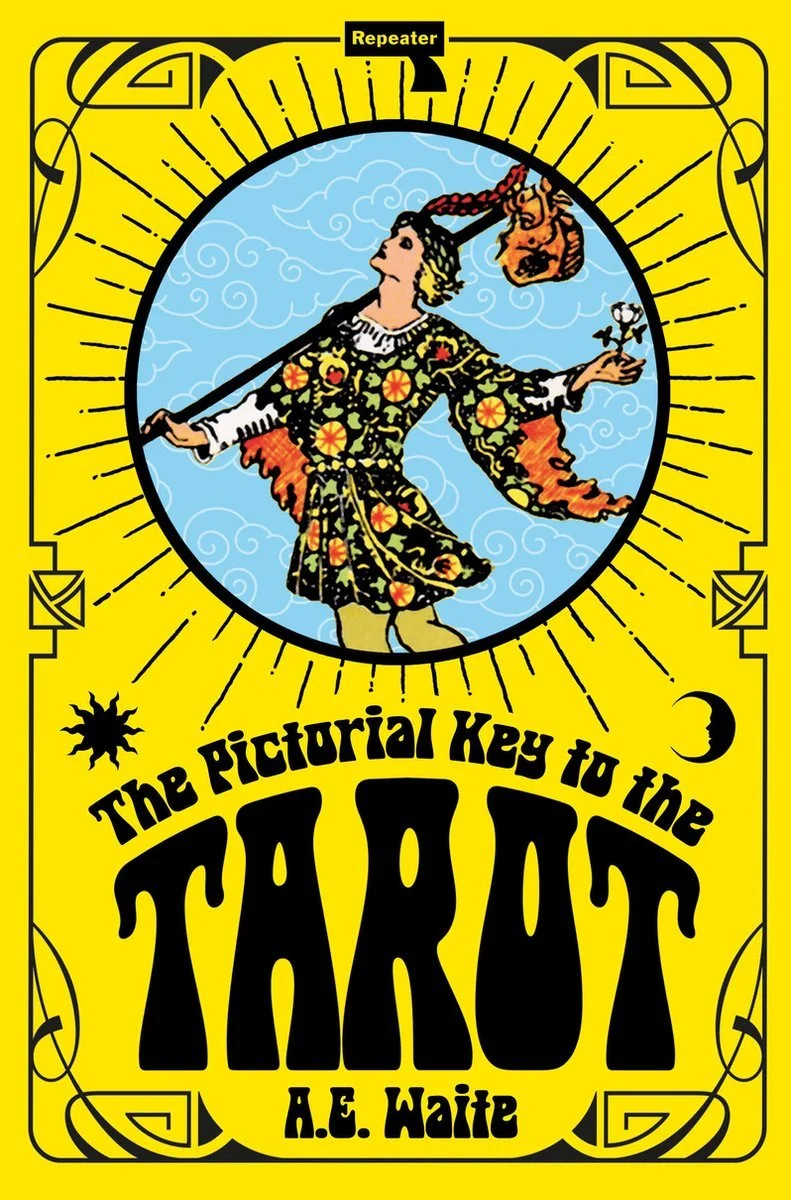
This depth and versatility explain why professional readers and serious enthusiasts have relied on this spread since the early 1900s, when it was first popularized by Arthur Edward Waite, the same man who created the Rider-Waite tarot deck. The version most readers use today comes from The Pictorial Key to the Tarot (1910), where Waite outlined the spread alongside the Rider-Waite deck.
What does the Celtic Cross look like?
The Celtic Cross gets its name from its visual appearance. When laid out on a table, the ten cards form a shape reminiscent of a Celtic cross, that distinctive cross with a circle around its intersection that you've probably seen in Irish and Scottish art and jewelry.
The spread consists of two main sections:
The Cross (Cards 1-6): The center of the reading features six cards arranged in a cross formation. Two cards sit in the middle, with one laid across the other (like a plus sign being intersected). Four additional cards surround this center, positioned above, below, left, and right, creating the cross shape with the circle around it.
The Staff (Cards 7-10): To the right of the cross, four cards are laid out in a vertical line from bottom to top, like a staff or pillar standing beside the cross. This column provides additional context about you, your environment, and where everything is heading.
Picture it this way: if you were looking down at a table, you'd see a cross-shaped arrangement on the left side, with a neat vertical line of four cards standing like a tower on the right side. The entire spread typically fits within a space about the size of a large placemat, making it practical for most reading surfaces.
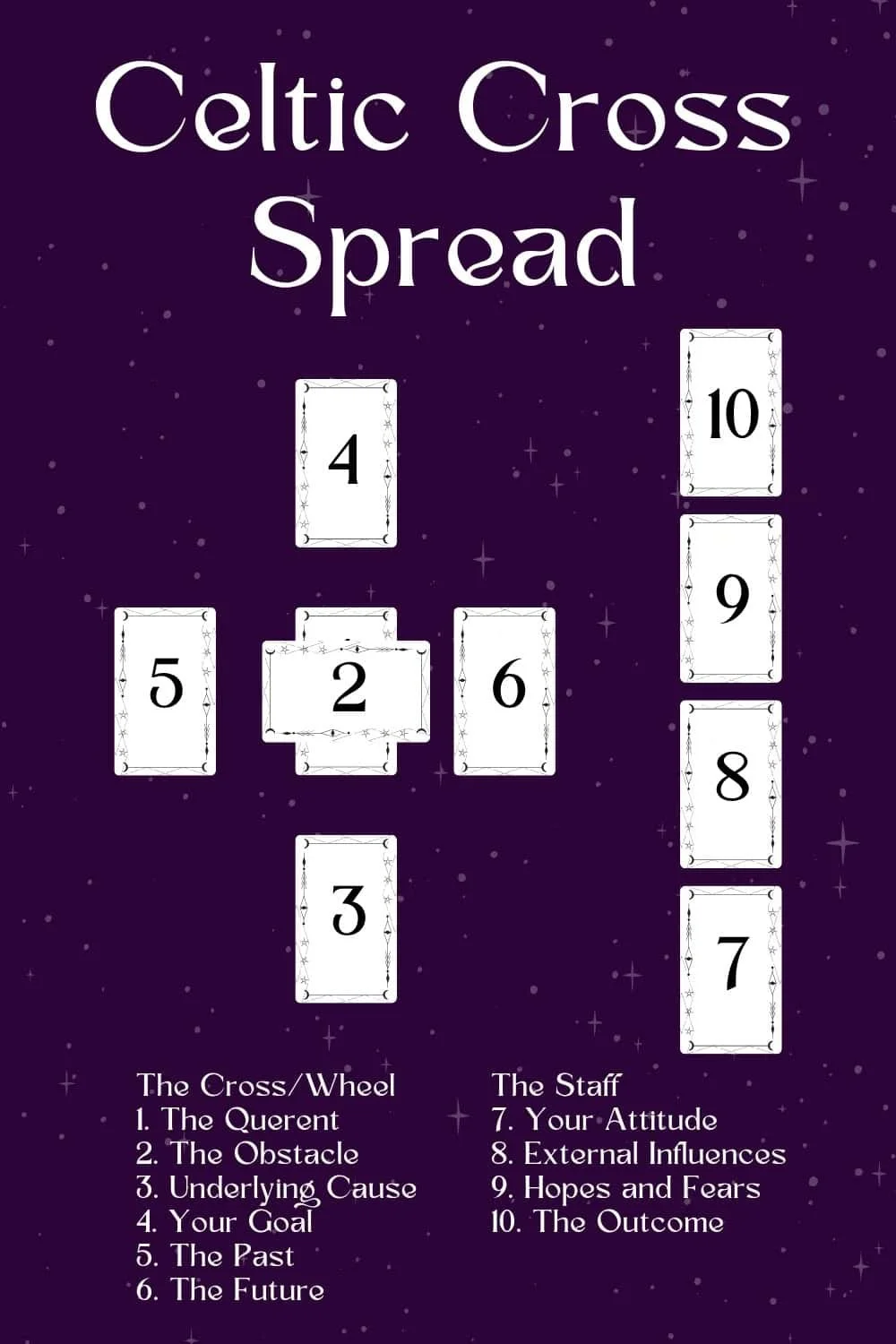
The 10 positions of the Celtic Cross explained
Understanding what each position represents is essential to reading the Celtic Cross effectively. Each card position asks a specific question about your situation, and together they create a complete narrative.
Position 1: The Present Situation
This card sits at the very center and represents where you are right now. It captures the essence of your current circumstances and the energy surrounding your question. This is the foundation of the entire reading. A card like The Fool here might suggest new beginnings and taking a leap of faith, while the Eight of Swords could indicate feeling trapped by circumstances or self-imposed limitations.
Position 2: The Challenge
Laid horizontally across the first card, this reveals the immediate obstacle, opposing force, or complicating factor you're facing. This isn't necessarily negative; sometimes the challenge is simply what needs to be understood, integrated, or worked through. Seven of Swords here might warn of deception or indicate the need for clever strategy, while Four of Swords could suggest that rest and recuperation are challenging you to slow down.
Position 3: The Foundation
Placed below the center cards, this position shows the underlying basis of the situation—the root cause or deep-seated patterns that created current circumstances. This often reveals past events, childhood influences, or long-standing beliefs. Understanding this foundation helps explain why things have unfolded as they have. Six of Cups might suggest that nostalgia or childhood patterns are at play.
Position 4: The Recent Past
Positioned to the left of the center, this card indicates influences that are just leaving or have recently affected the situation. These energies are still close enough to feel, but are moving into the background. This helps you understand what led up to your current moment.
Position 5: The Crown
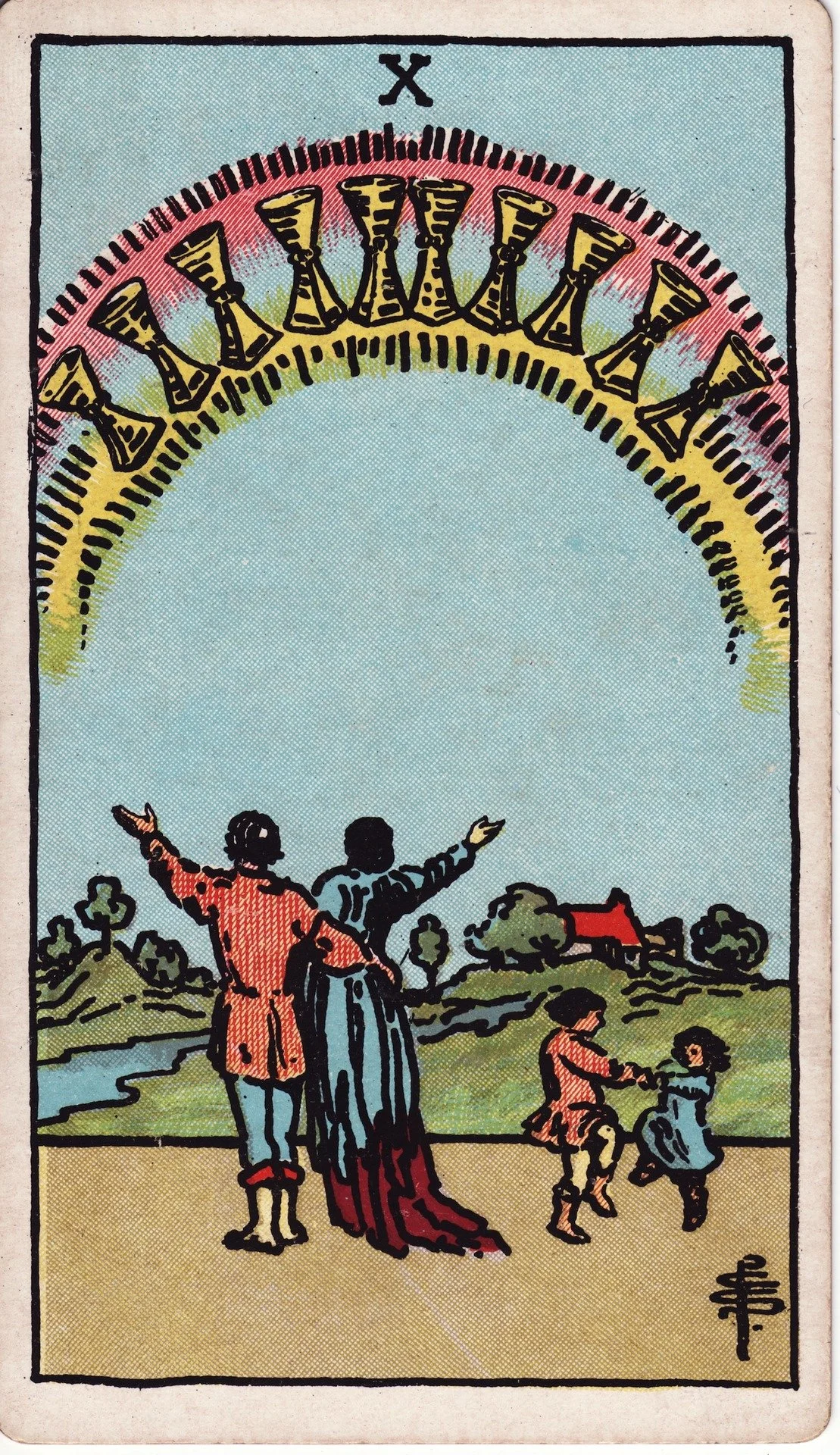
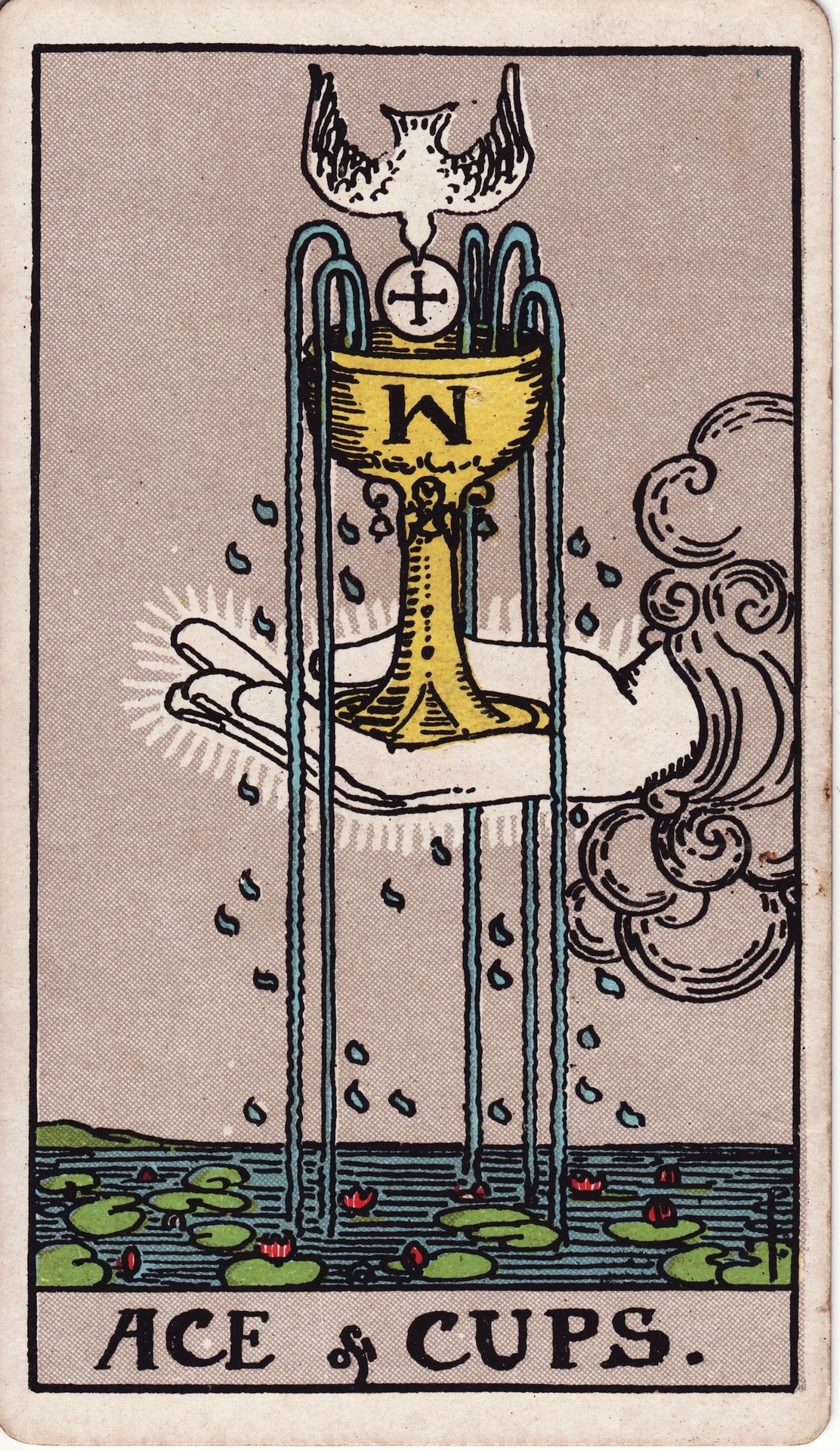
Sitting above the center cards, this position represents the highest potential available to you, what's possible if you align with your best self and make optimal choices. It shows potential rather than guarantee. Ten of Cups here would indicate the possibility for lasting happiness and emotional fulfillment, while Ace of Cups might suggest new emotional beginnings and spiritual renewal.
Position 6: The Near Future
To the right of the center, this card reveals what's coming in the immediate term, usually within weeks or a few months. It shows the natural progression if current circumstances continue their trajectory. This gives you a preview of where things are headed in the short term.
Position 7: Your Position
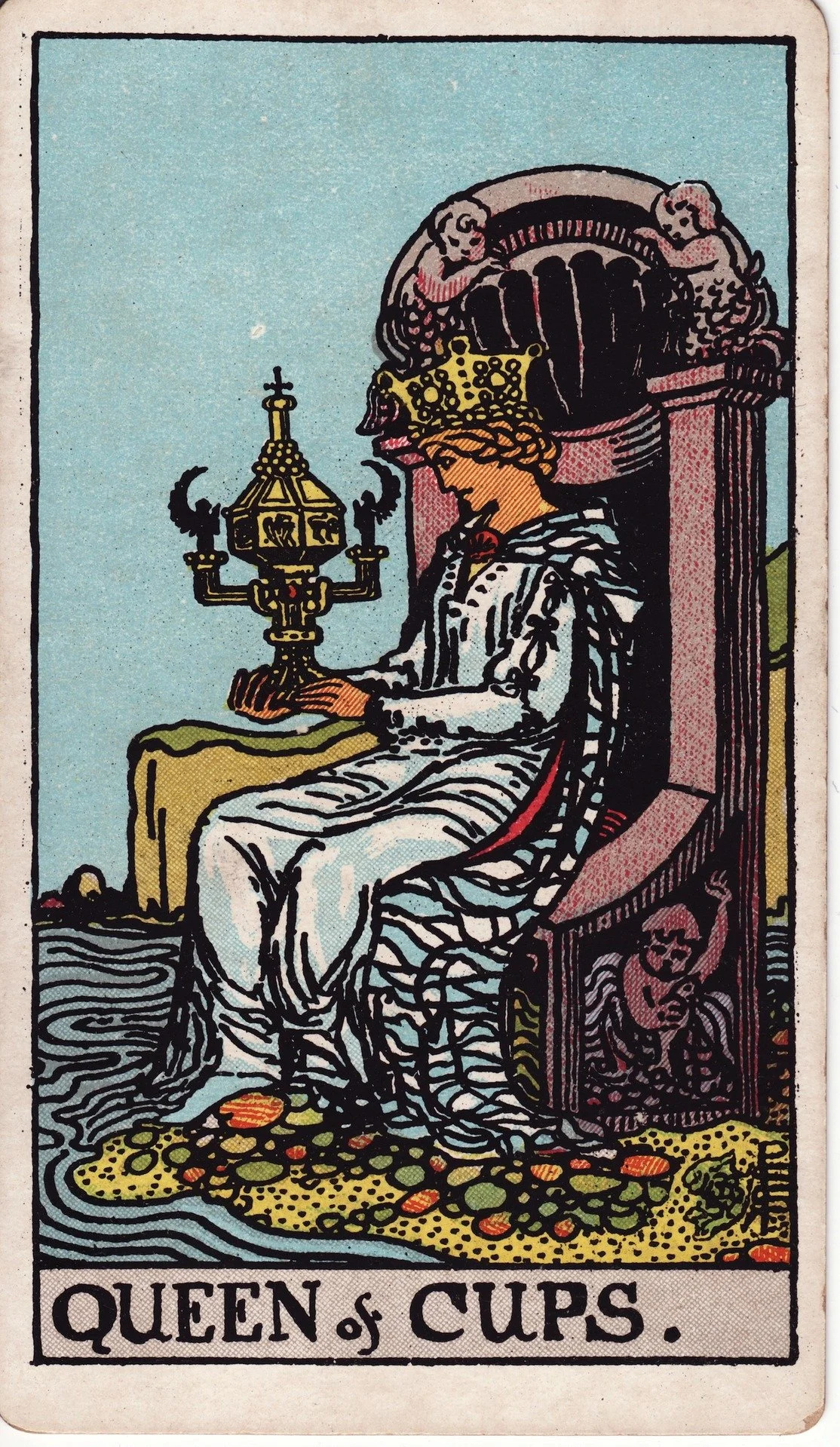
The bottom card of the staff reflects your attitude, beliefs, or approach to the situation, how you're showing up internally and how you see yourself in this scenario. Queen of Cups might indicate you're approaching things with emotional wisdom and nurturing energy, while Knight of Swords could suggest you see yourself as a direct, action-oriented problem-solver.
Position 8: External Influences
The second card from the bottom shows what's happening around you—other people's actions, their perceptions of you, environmental factors, or circumstances beyond your control that are affecting the situation. This reveals forces outside yourself that are shaping your experience.
Position 9: Hopes and Fears
The third card from the bottom often reveals your deepest desires or anxieties about the situation. Interestingly, hopes and fears often intertwine; what we most want is also what we most fear. Nine of Swords here might indicate anxiety and worry weighing heavily on your mind, while Two of Cups could show deep longing for partnership and connection.
Position 10: The Final Outcome
The top card of the staff shows where things are heading based on the current trajectory and all the factors revealed in the previous nine positions. This isn't set in stone, outcomes can shift if significant changes are made, but it shows the most likely result given present circumstances and energies. This is your answer to "Where is all of this going?"



Why is the Celtic Cross so popular?
The Celtic Cross has remained the most beloved tarot spread for good reason—it strikes the perfect balance between depth and accessibility. Here's why readers keep coming back to it:
It tells a complete story. Unlike a single card or even a three-card spread, the Celtic Cross doesn't just answer your question—it explains the whole situation. You learn not just what's happening, but why it's happening, how you got here, what's working for or against you, and where you're headed. It's like getting a full chapter of your life's story rather than just a single sentence.
It works for any question. Whether you're asking about love, career, finances, health, spiritual growth, or major life decisions, the Celtic Cross adapts beautifully. The same ten positions can illuminate a romance question ("Should I give this relationship another chance?"), a career dilemma ("Is it time to change jobs?"), or a spiritual inquiry ("What's blocking my personal growth?").
It reveals hidden factors. Real-life situations are never simple, and the Celtic Cross acknowledges this complexity. It shows you not just the obvious surface issues, but also the underlying causes you might not have considered, the external influences you can't control, and even your own hidden hopes and fears that might be shaping the situation more than you realize.
It provides actionable guidance. The spread doesn't just describe your situation, it helps you understand your role in it and what you can do about it. By showing your position, your attitude, and the trajectory you're on, you empower yourself to make informed choices rather than feel like a passive observer of your own life.
When should you use the Celtic Cross?
When should you use the Celtic Cross? Use this spread whenever you need serious insight into important matters. It's particularly valuable for:
Complex situations with multiple factors. When several things are happening at once and you need to understand how they all fit together, the Celtic Cross untangles the threads. For instance, if you're dealing with relationship stress while also considering a career change, this spread can show you how these situations influence each other.
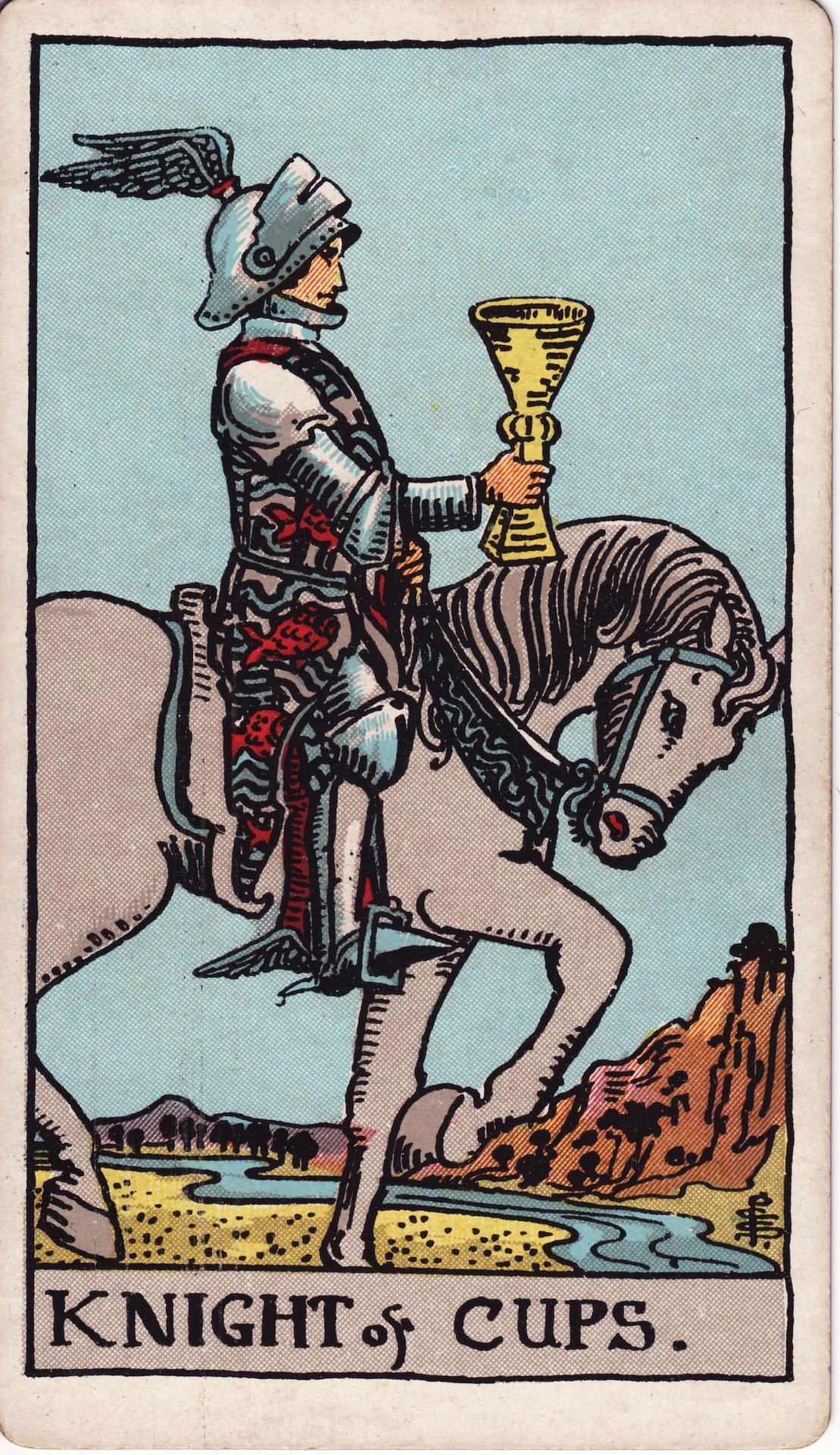
Major life decisions. When you're facing a significant choice—whether to move to a new city, commit to a relationship, change careers, or make any other big transition—the Celtic Cross provides the thorough examination these important decisions deserve. Cards like The Lovers might reveal the deeper choice beneath the surface question, while Knight of Cups could indicate following your heart's calling.
Understanding recurring patterns. If you keep ending up in similar situations (always attracting the same type of partner, repeatedly facing the same challenges at work), the Celtic Cross can reveal the underlying patterns and beliefs creating these cycles. Five of Cups appearing in your foundation position might indicate patterns of focusing on loss rather than what remains.
When you feel stuck or confused. Sometimes you know something's wrong but can't quite put your finger on what it is. The Celtic Cross excels at bringing clarity to murky situations, illuminating aspects you hadn't considered and helping you see your circumstances from new angles.

What makes a good Celtic Cross question?
The Celtic Cross works best with open-ended questions that invite exploration rather than simple yes/no queries. Instead of asking "Will I get the job?" try "What do I need to know about this career opportunity?" Rather than "Does he love me?" ask "What's the true nature of this relationship and where is it heading?"
Good Celtic Cross questions typically start with:
"What do I need to know about..."
"How can I best approach..."
"What's really going on with..."
"Where is this situation heading and why..."
These types of questions allow the spread to reveal its full depth, showing you not just outcomes but the entire landscape of your situation.
The Celtic Cross as your tarot foundation
Learning the Celtic Cross is like learning to drive: once you master it, it becomes second nature, and you'll use it again and again throughout your tarot journey. While there are dozens of other spreads you might explore, many readers find that the Celtic Cross remains their most-used layout because it consistently delivers meaningful, actionable insight.
Whether you're reading for yourself or others, whether you're exploring questions about love with cards like Three of Cups, celebrating friendship and joy, or examining challenges with cards like Page of Cups, bringing gentle emotional messages, the Celtic Cross provides a reliable framework for deep, transformative readings.
The Celtic Cross spread offers unmatched depth for anyone seeking a genuine understanding of life's complexities. Start with simpler spreads if you're new to tarot, but know that the Celtic Cross awaits when you're ready for readings that truly illuminate the path forward.