Aries Tarot Card: The Emperor Explained
Aries is associated with The Emperor in tarot. Both share themes of authority, willpower, and the drive to impose order on the world through sheer force of personality. But this connection also highlights the tension between Aries' instinct to act first and The Emperor's demand for discipline and control.

Quick Facts about the Aries Tarot Card
Zodiac sign: Aries
Dates: March 21 – April 19
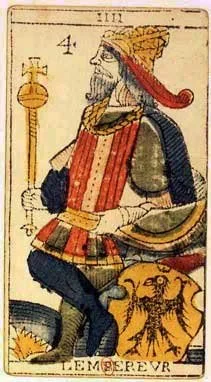
Tarot card: The Emperor (IV)
Element: Fire
Modality: Cardinal
Ruling planet: Mars
Key traits: Bold, pioneering, competitive, direct, impulsive, energetic
Why The Emperor Represents Aries
Aries leads. It doesn't wait for consensus, doesn't second-guess the decision, and doesn't apologize for taking charge. The Emperor operates the same way: he is the archetype of someone who has claimed authority and intends to keep it. Both share an orientation toward action over deliberation, dominance over compliance, and presence over subtlety. Where Aries charges forward, The Emperor has already staked the territory.
Symbolically, The Emperor sits on a stone throne, armored beneath his robes, readiness dressed as governance. The ram heads carved into that throne are not coincidental. Aries is the ram, and The Emperor embodies what the ram becomes when raw drive is channeled into sustained leadership. Mars, Aries' ruling planet, governs conflict, ambition, and the will to win; The Emperor is what that energy looks like when it matures into something structural.
The shadow here is real. Aries energy at its worst is reactive, domineering, and incapable of collaboration. The Emperor reversed amplifies exactly that: a leader who mistakes control for strength, who bulldozes rather than builds. For Aries, this card is both a portrait and a warning: the traits that make you effective can calcify into the very thing that limits you.
Tarot Cards That Carry Aries Energy
Aries also influences several Minor Arcana cards, especially through its decan rulerships.
Two of Wands. Mars rules the first decan of Aries (0–10°), and the Two of Wands captures that initial surge of ambition — a figure standing at the edge of something, holding the world in hand but not yet moving. It reflects Aries' drive to expand before the path is even clear.
Three of Wands. The Sun rules the second decan (10–20°), brightening Aries' fire into something more confident and forward-looking. The Three of Wands shows ships already launched — plans in motion, the bold bet placed. It's Aries at its most optimistic and its most exposed.
Four of Wands. Venus rules the third decan (20–30°), softening Aries just enough to celebrate what's been built. The Four of Wands is the victory lap — a moment of joy after the push. For a sign that rarely slows down, this card marks the rare Aries exhale.
Queen of Wands. The Queen of Wands straddles the Pisces-Aries cusp and carries forward Aries' warmth, confidence, and magnetic self-possession. She leads through charisma rather than command, but the fire is still unmistakably there.

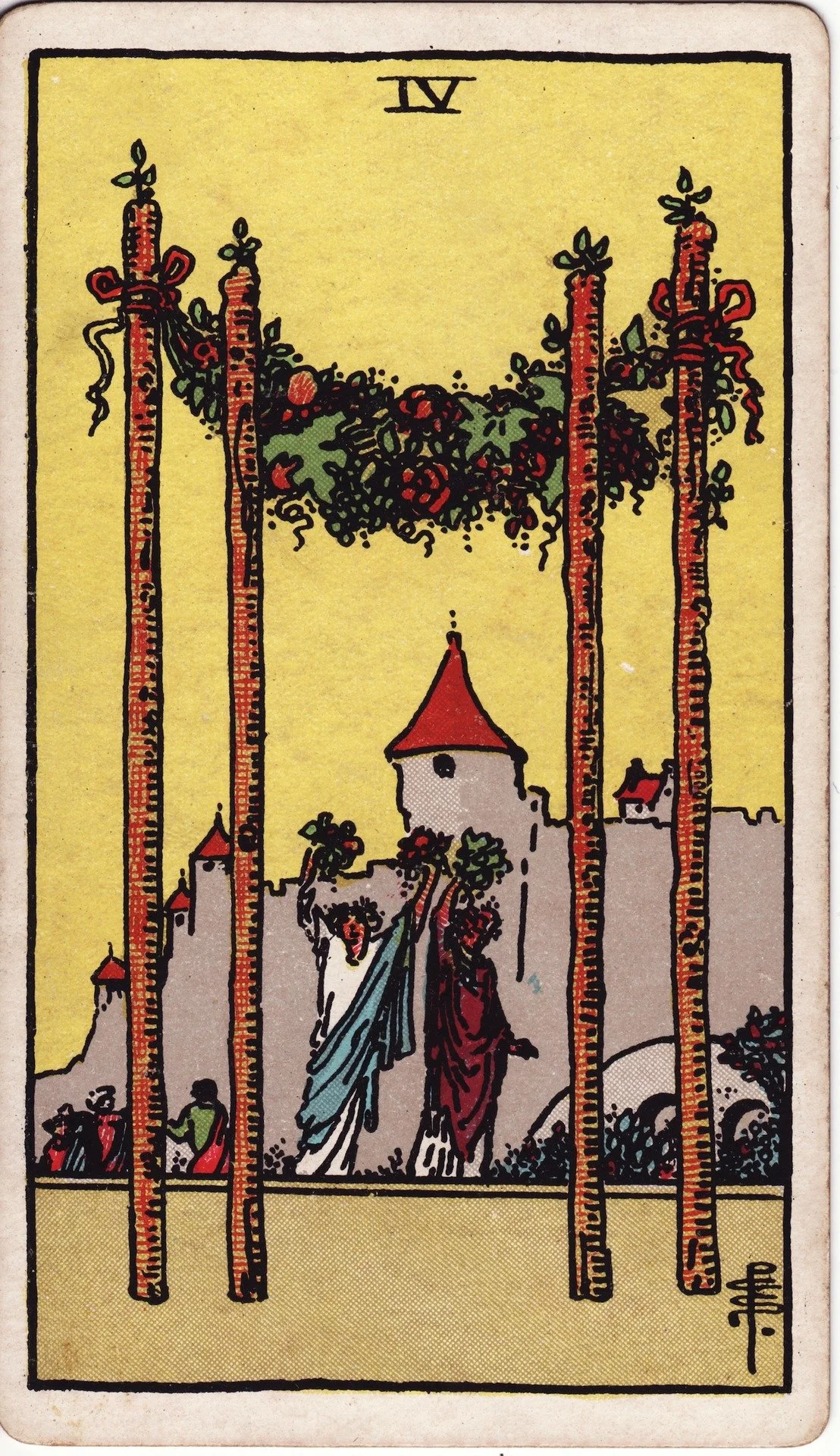


From left to right, top to bottom: The Two of Wands, The Three of Wands, The Four of Wands, and the Queen of Wands.
What It Means When The Emperor Appears for Aries
Upright meaning for Aries: The Emperor appearing in a reading for an Aries native is often a validation — a mirror held up to confirm that the instinct to lead, structure, or take charge is exactly right for this moment. It can signal that it's time to stop deferring, own your authority, and stop apologizing for the size of your ambition. In practical terms: step up, set the terms, build the framework.
Reversed meaning for Aries: Reversed, The Emperor challenges Aries to examine whether control has curdled into rigidity. Is the drive to lead actually a fear of being led? Is the directness coming across as aggression? The reversed Emperor for Aries is a specific call to loosen the grip — to recognize that the most powerful move is sometimes letting someone else steer. It can also flag burnout from carrying too much, too alone.
Is The Emperor a Good Tarot Card for Aries?
Not inherently good or bad — but it's rarely neutral for Aries, because it hits close to home.
When it's aligned: When Aries is in a phase of building something, a project, a team, a direction, The Emperor is an empowering card. It confirms that the instinct toward structure and leadership is the right energy to bring. It feels natural because it reflects what Aries does well when focused.
When it's a warning: When Aries is already in overdrive: pushing too hard, refusing input, burning bridges in the name of decisiveness — The Emperor showing up is a caution, not a compliment. It asks whether the authority being exercised is earned or just asserted. Aries tends to identify strongly with this card, which is exactly why the shadow side can go unexamined.
Common Pitfalls for Aries in Tarot Readings
Over-identifying with power cards. Aries readers and querents alike can unconsciously skew toward cards that confirm strength — The Emperor, the King of Wands, the Seven of Wands — and gloss over cards that require softness or patience. If a reading feels like a highlight reel, something is probably being filtered out.
Reading reversals as attacks. Aries tends to take reversed cards personally, especially authority-adjacent ones. A reversed Emperor or reversed King of Wands isn't a verdict on character; it's information about energy. The reflex to dismiss or fight the reversal rather than sit with it is a pattern worth watching.
Explore more…
Major Arcana · Suit of Wands · Suit of Cups · Suit of Swords · Suit of Pentacles · Tarot Spreads
Aries · Taurus · Gemini · Cancer · Leo · Virgo · Libra · Scorpio · Sagittarius · Capricorn · Aquarius · Pisces