Pyramid Tarot Spread: How It Works and How to Read It
The pyramid spread arranges cards in stacked rows that widen toward the base, mirroring the shape of a pyramid. A single card sits at the apex. Below it, a row of two. Below that, a row of three. The structure is hierarchical by design: the higher the card, the more foundational or thematic its role; the lower the card, the more grounded and concrete its meaning. Reading a pyramid spread means reading downward: from the overarching theme at the top to the practical reality at the base.
The most common version uses six cards across three rows. A ten-card version extends the layout to four rows for readers who want additional depth. This guide focuses on the six-card version, which covers the full arc from theme to outcome without becoming unwieldy.
The Six Positions
Position 1 — The Apex: Core Theme
The single card at the top of the pyramid is the most important card in the reading. It represents the overarching theme, the central question, or the dominant energy shaping the entire situation. Everything below it is read in relation to this card. A Major Arcana card at the apex — The Empress, The Tower, Judgement — sets a powerful frame for the entire reading. A Minor Arcana card here doesn't weaken the reading; it simply points to a more specific, concrete theme rather than a universal one.
Positions 2 and 3 — The Middle Row: Forces at Play
The two cards in the middle row represent the primary forces shaping the situation. They may complement each other, reinforcing the same energy in different ways. Or they may oppose each other, describing a tension or conflict at the heart of the matter. Either way, they explain how the theme of the apex card is manifesting. Read them as a pair — not independently, but in conversation with each other and with the card above.
Positions 4, 5, and 6 — The Base Row: Practical Reality
The three cards at the base bring the reading down to earth. The left card (position 4) identifies the primary challenge or obstacle. The center card (position 5) points to the resources, strengths, or support available to the querent. The right card (position 6) shows the likely outcome or the direction things are heading. Together, the base row translates the abstract themes of the upper rows into concrete, actionable information.
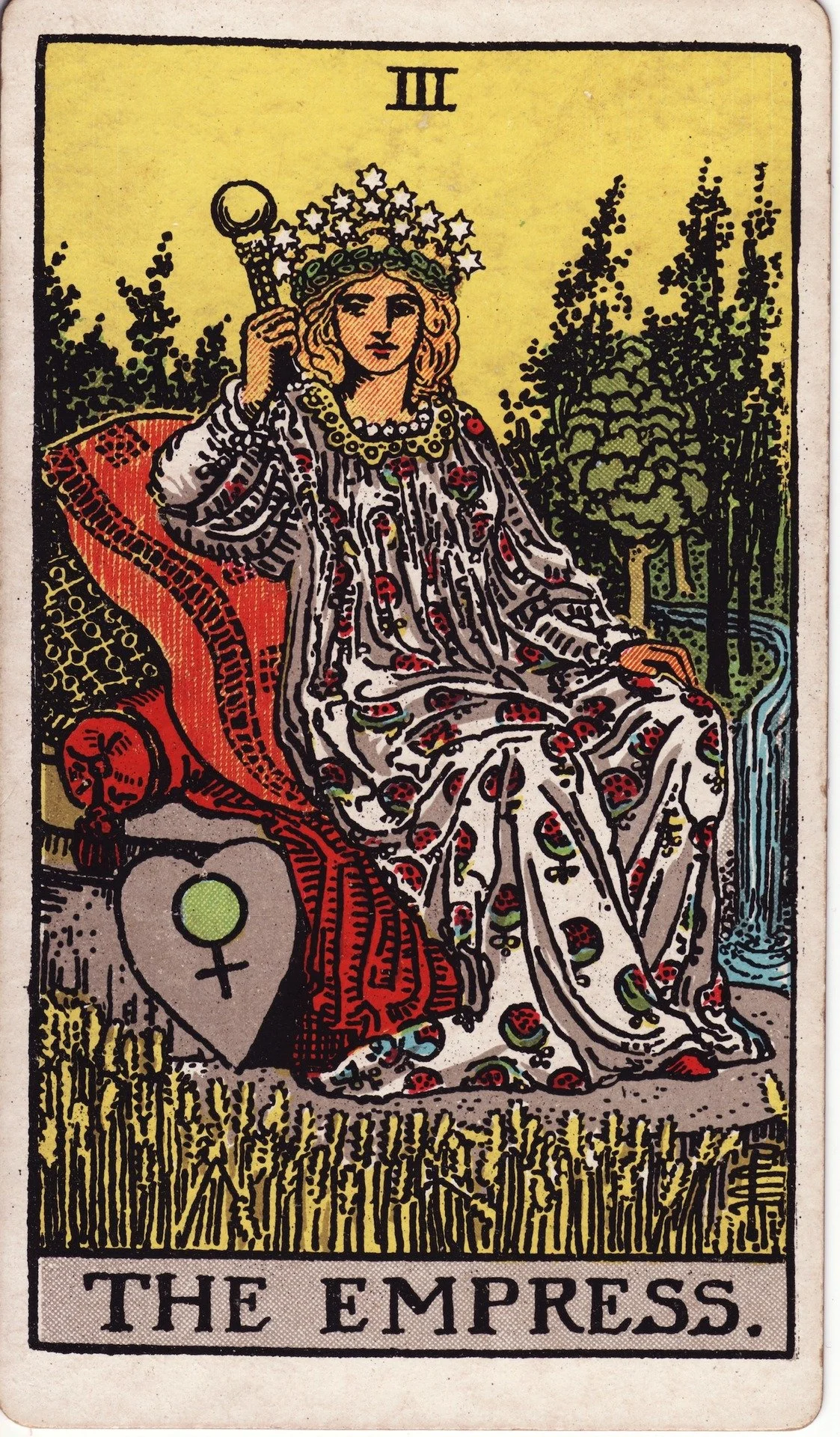

The Empress and The Tower tarot cards.
How to Do a Pyramid Reading
Decide on your question before shuffling. The pyramid works well for both specific questions and broader inquiries: the apex card will define the frame regardless, so even an open question like "what do I need to understand about this situation?" will produce a coherent reading.
Shuffle with your question in mind, then draw six cards and place them face down: one at the top, two below it, three below that. Turn them over starting at the apex and working downward, row by row. Interpret each card in its position before moving to the next row, then read the full layout as a connected whole.
Reading the Pyramid as a Whole
The pyramid's shape encodes the reading's logic. The higher you are, the more thematic and foundational the information. The lower you are, the more practical and immediate. A strong, clear card at the apex makes the rest of the reading easier to interpret — it gives every card below it a frame. A complex or ambiguous apex card means the whole reading will require more careful attention.
The middle row is often the most revealing section, because it shows how the core theme is actually playing out in the querent's life. Two cards in the middle row that contradict each other — say, a card of expansion paired with a card of restriction — describe a situation where the querent is being pulled in two directions simultaneously. That tension is usually the heart of whatever the question is really about.
At the base, read the challenge and resource cards (positions 4 and 5) as a pair before turning to the outcome. The outcome card (position 6) is most meaningfully understood as the result of how the querent navigates the tension between what's blocking them and what's available to them. It's not a fixed destination — it shifts depending on which of the two base energies the querent leans into.
Notice the overall arc from apex to base. Does the reading move from abstract complexity toward concrete clarity? That's a sign the situation, while perhaps confusing at a high level, has a clear practical path forward. Does it move from a clear theme at the top into confusion or difficulty at the base? That suggests the querent understands the situation conceptually but is struggling with its practical reality.
When To Use The Pyramid Tarot Card Spread
The pyramid is at its best when you want a reading that moves clearly from the conceptual to the concrete, when you're trying to understand not just what's happening but how a broader theme or energy is filtering down into your day-to-day reality. Its hierarchical structure makes it particularly intuitive to explain to someone else, which makes it a good choice for reading for others as well as for yourself.
It's less suited to questions that are purely practical or that require a detailed timeline. For those, the horseshoe tarot spread or Celtic Cross tarot spread will serve you better. The pyramid's strength is in its architecture — the way it organizes insight from the most essential down to the most actionable.
Explore more spread layouts: Tarot Spreads by Layout
Deepen your card knowledge:
Major Arcana · Cups · Swords · Wands · Pentacles