Three-Card Tarot Spread:
How It Works, How to Read It, and Every Variation Worth Knowing
The three-card tarot spread is the most widely used layout in tarot practice. Three cards, three positions, read left to right — it's simple enough for a first reading and versatile enough to stay useful for decades. What makes it endure isn't just its simplicity. It's the fact that the same physical layout can ask entirely different questions depending on how you assign the positions before you draw. Past, present, future is only the beginning.
This guide covers how the three-card spread works, how to do a reading step by step, the most useful position variations, how to read the cards as a connected sequence rather than three isolated answers, and when to use this layout over a larger spread.
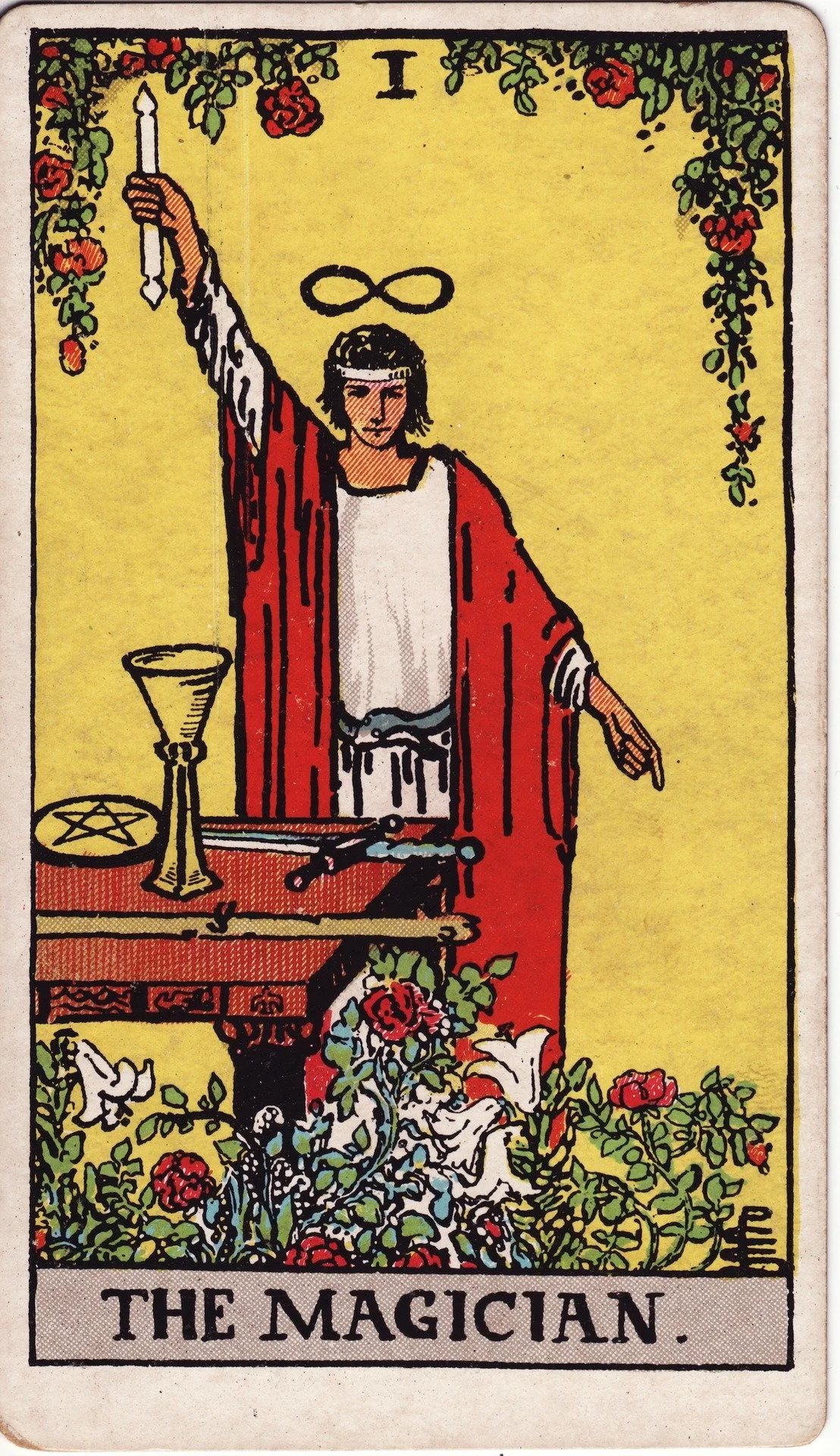

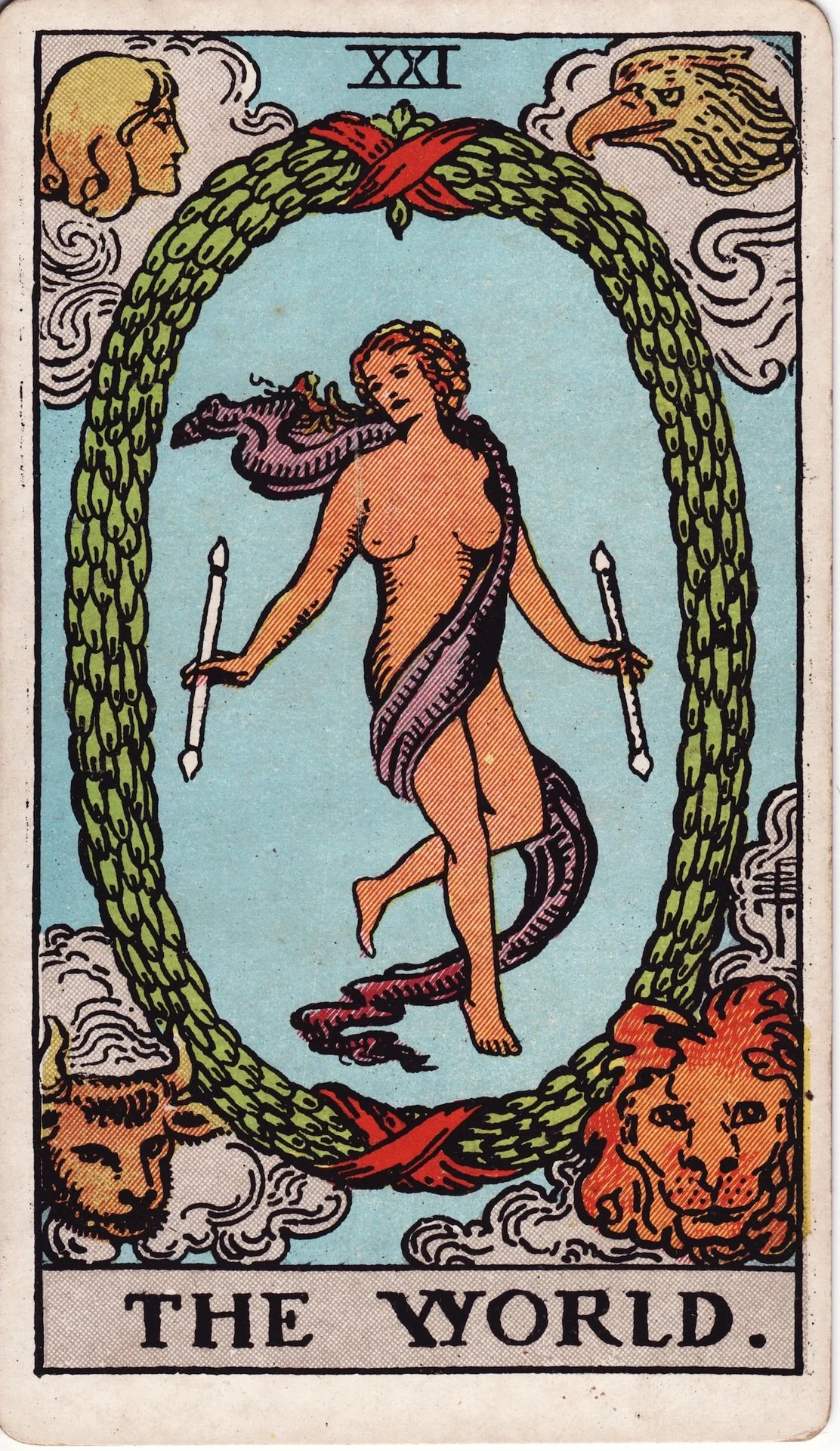
A three-card tarot spread consisting of The Magician, The Seven of Wands and The World.
What Is the Three-Card Tarot Spread?
The three-card spread is a horizontal row of three cards drawn from a shuffled deck and placed face down from left to right. Each card occupies a position with a predetermined meaning — a meaning you assign before drawing, not after. The left card is always read first, the center card second, and the right card third. Together, the three cards form a sequence: a beginning, a middle, and a direction.
The positions don't just describe three separate things. They contextualize each other. The center card is understood differently depending on what sits on either side of it. A challenging card in the center reads very differently when it's flanked by The Star on the right than when it's flanked by The Tower. That interplay between cards is where a lot of the reading's insight actually lives.


The Star and The Tower tarot cards
How to Do a Three-Card Tarot Reading
Start by deciding on your question or intention. The more specific your question, the more useful the reading. "What do I need to know today?" will get you a different kind of answer than "What is blocking my progress at work?". Neither is wrong, but the second will give you more actionable information.
Next, decide which three-card variation you'll use before you shuffle. The position meanings shape how you interpret every card, so establishing them in advance prevents you from retrofitting meanings to cards you've already drawn.
Shuffle the deck while holding your question in mind. How you shuffle is a matter of personal practice; some readers shuffle a fixed number of times, others shuffle until a card falls out or until the deck feels ready. What matters is that the shuffling is intentional rather than mechanical.
When you're ready, draw three cards and place them face down in a row from left to right. Turn them over one at a time, starting with the leftmost card. Interpret each card in relation to its position, then step back and look at all three together as a sequence before finalizing your reading.
If you journal your readings, which is worth doing, note the date, the question, the variation you used, the three cards drawn, and your interpretation. Returning to past readings to see how they unfolded is one of the most effective ways to deepen your understanding of the cards.
The Most Useful Three-Card Variations
Past / Present / Future: the classic version. The left card is what led here, the center is what's active now, and the right is where things are headed if current patterns continue. The future card reflects the likely direction, not a fixed outcome.
Situation / Action / Outcome: more practical than a timeline. The left card describes the situation, the center suggests the best action to take, the right shows what that action leads to. Useful when you want directional guidance rather than a narrative.
Mind / Body / Spirit: a self-examination layout for general check-ins rather than specific questions. Left is your mental state, center is your physical or material circumstances, right is your spiritual or emotional energy.
Option A / Option B / What to Consider: for decisions where you're weighing two paths. Left illuminates one option, right illuminates the other, center — read last — offers the factor that should inform the choice. The Hermit in the center position often signals that the decision needs more time.
What to Embrace / What to Release / What to Focus On: a forward-facing layout built for transitions. Left is what to lean into, center is what's ready to be let go, right is where to direct your attention next.
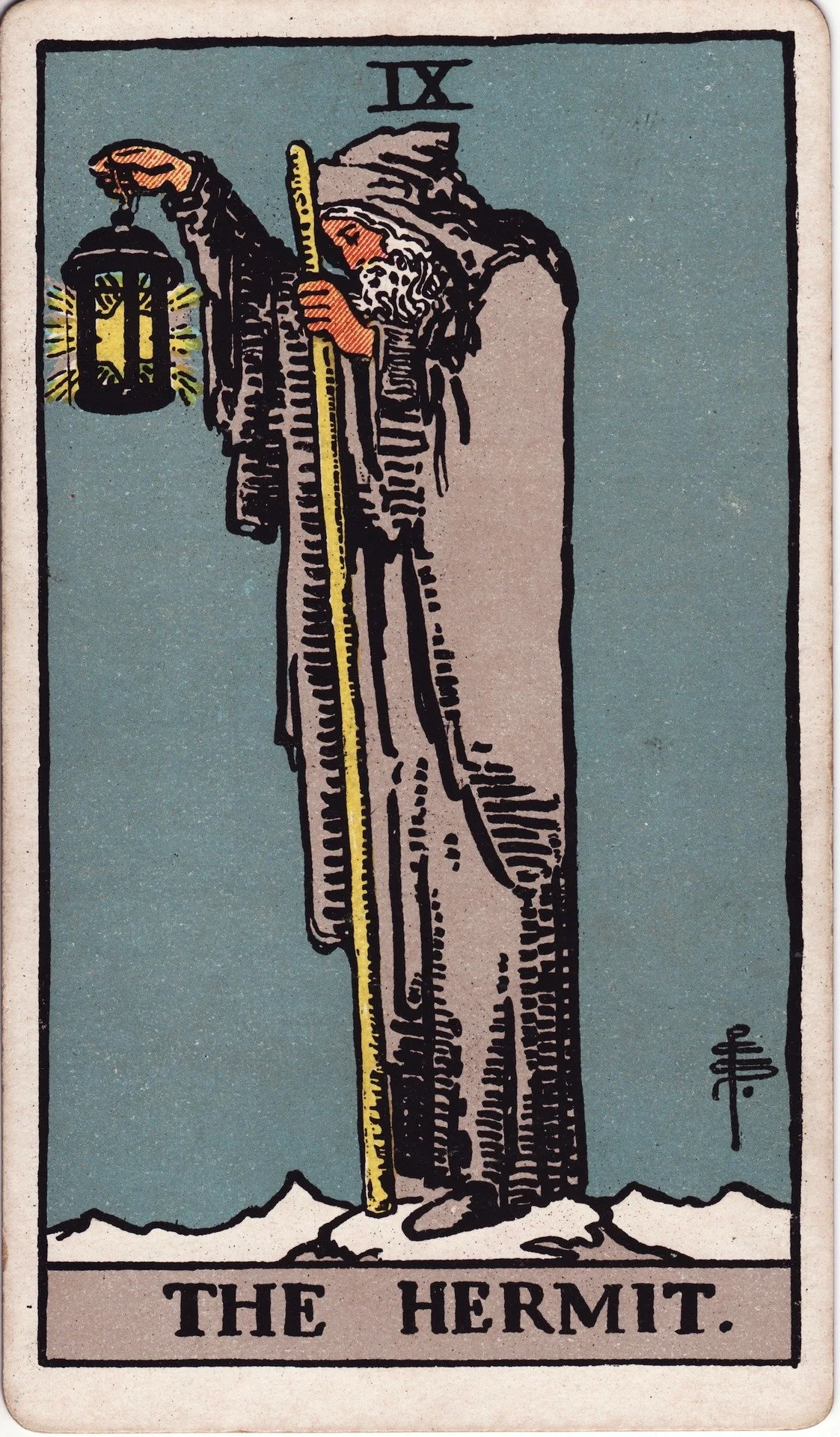
The Hermit tarot card
Reading the Three Cards as a Sequence
The most common mistake in three-card readings is interpreting each card in isolation and then moving on. The real work is in reading them as a connected story.
Look at the overall balance of the three cards. If all three are Major Arcana, the situation carries significant weight — these are not ordinary, everyday energies at play. If all three are from the same suit, the reading is dominated by that suit's element: all Cups points to a deeply emotional situation, all Swords to one defined by conflict or mental pressure, all Wands to one driven by action and ambition, all Pentacles to material or practical concerns.
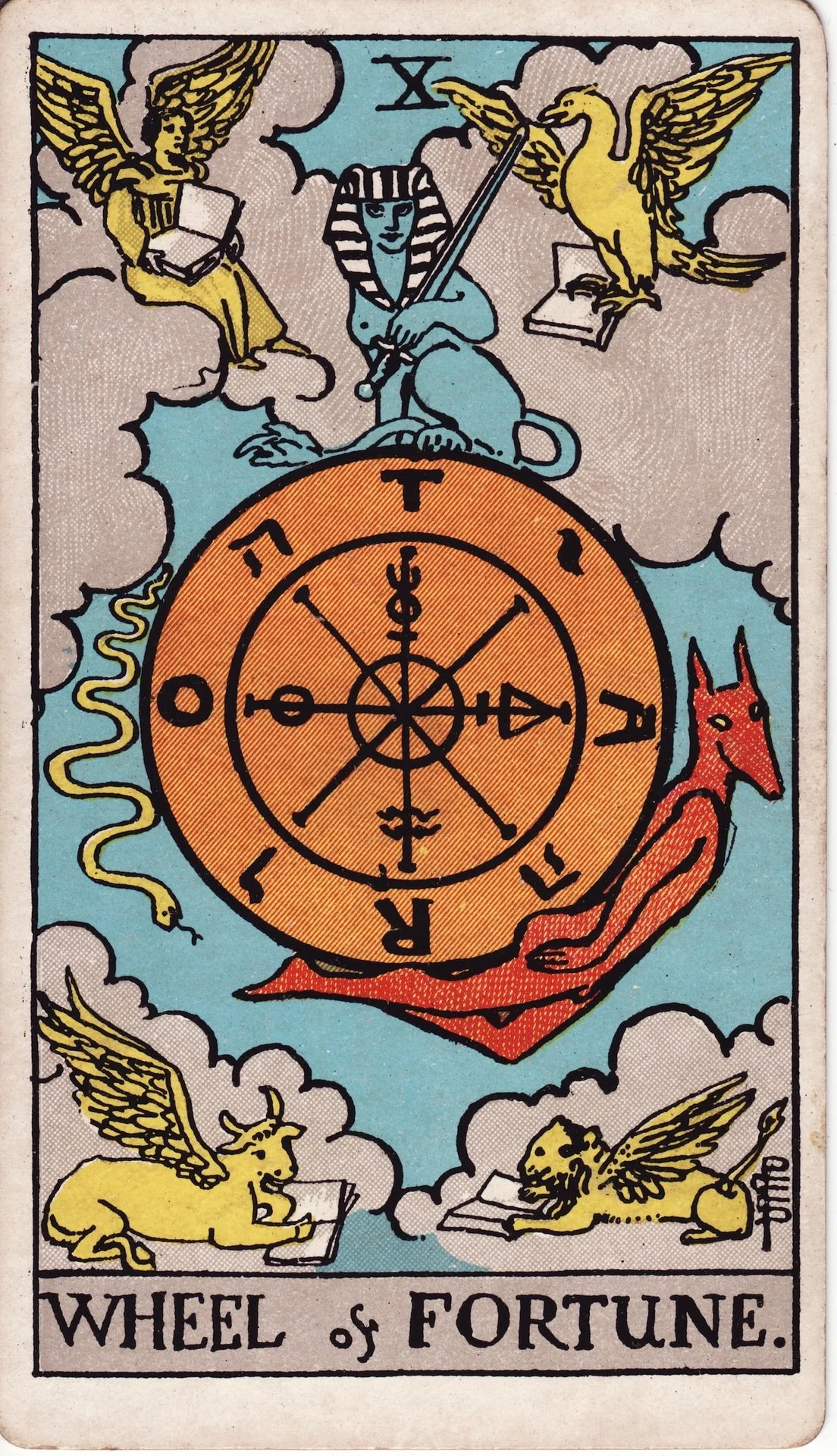
Look at how the energy moves across the row. Does it escalate, calm down, or shift direction? Three cards that move from difficulty toward resolution tell a different story than three cards that move from stability into turbulence. The Fool in the past, The Wheel of Fortune in the present, and The World in the future describes a journey reaching completion. The same three cards in reverse order describe something quite different.
Notice when cards contradict each other. A promising future card flanked by two difficult cards is a signal, not a guarantee; it suggests the outcome is available but not automatic.

Explore more spread layouts: Tarot Spreads by Layout
Deepen your card knowledge:
Major Arcana · Cups · Swords · Wands · Pentacles