Astrological Tarot Spread: How It Works and How to Read It
The astrological tarot spread places twelve cards in a circle, one for each of the twelve astrological houses. Each house governs a specific domain of life — identity, money, communication, home, creativity, health, relationships, transformation, philosophy, career, community, and the subconscious — and the card drawn for each house reflects the energy at work in that area. An optional thirteenth card placed in the center of the circle serves as the overall theme of the reading.
It's one of the most comprehensive layouts in tarot. A full astrological spread covers every major area of a person's life in a single reading, which makes it better suited to annual overviews and big-picture check-ins than to specific situational questions. If you want to understand where you are across all areas of life at once, this is the layout for it.
The Twelve Houses of the Astrological Spread
House 1 — Identity and Self
The first house governs the self: your personality, your physical presence, how you present yourself to the world, and how you're initiating new things in your life right now. The card here reflects the energy you're embodying and projecting at this time.
House 2 — Money and Possessions
The second house covers material security — income, savings, possessions, and your relationship with money more broadly. The card here points to what's active in your financial life and how you're relating to the material world.
House 3 — Communication and Learning
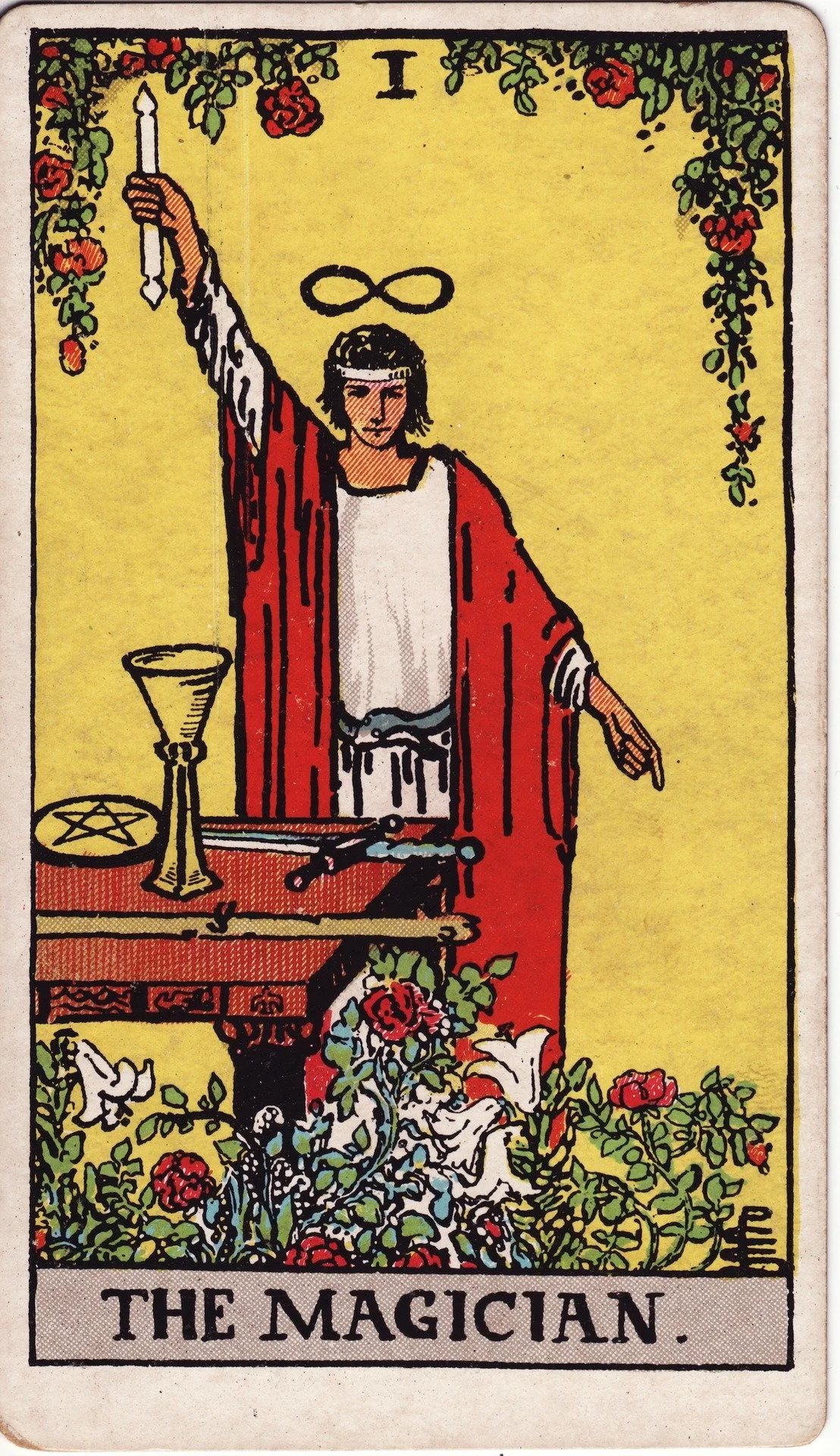
The third house governs how you think, communicate, and take in information. It also covers siblings, short journeys, and the immediate environment. The Magician here points to strong communicative ability and the skillful use of words. The Hanged Man suggests a pause in communication or a need to shift how you're expressing yourself.
House 4 — Home and Roots
The fourth house covers home, family, ancestry, and the private foundations of your life. It reflects what's happening in your domestic world and in the emotional bedrock that underlies everything else.
House 5 — Creativity and Pleasure
The fifth house governs creative expression, romance, play, and children. It's the domain of what you do for pure joy — how you create, how you flirt with life, and where your playful energy is currently directed.
House 6 — Health and Daily Routine
The sixth house covers day-to-day work, physical health, habits, and service. The card here reflects the state of your routines and your body, and points to what needs attention in the practical rhythms of daily life.
House 7 — Relationships and Partnerships
The seventh house governs one-on-one relationships: romantic partnerships, close friendships, business partnerships, and significant others of all kinds. It reflects the current energy of your relationships and what they're asking of you.
House 8 — Transformation and Shared Resources
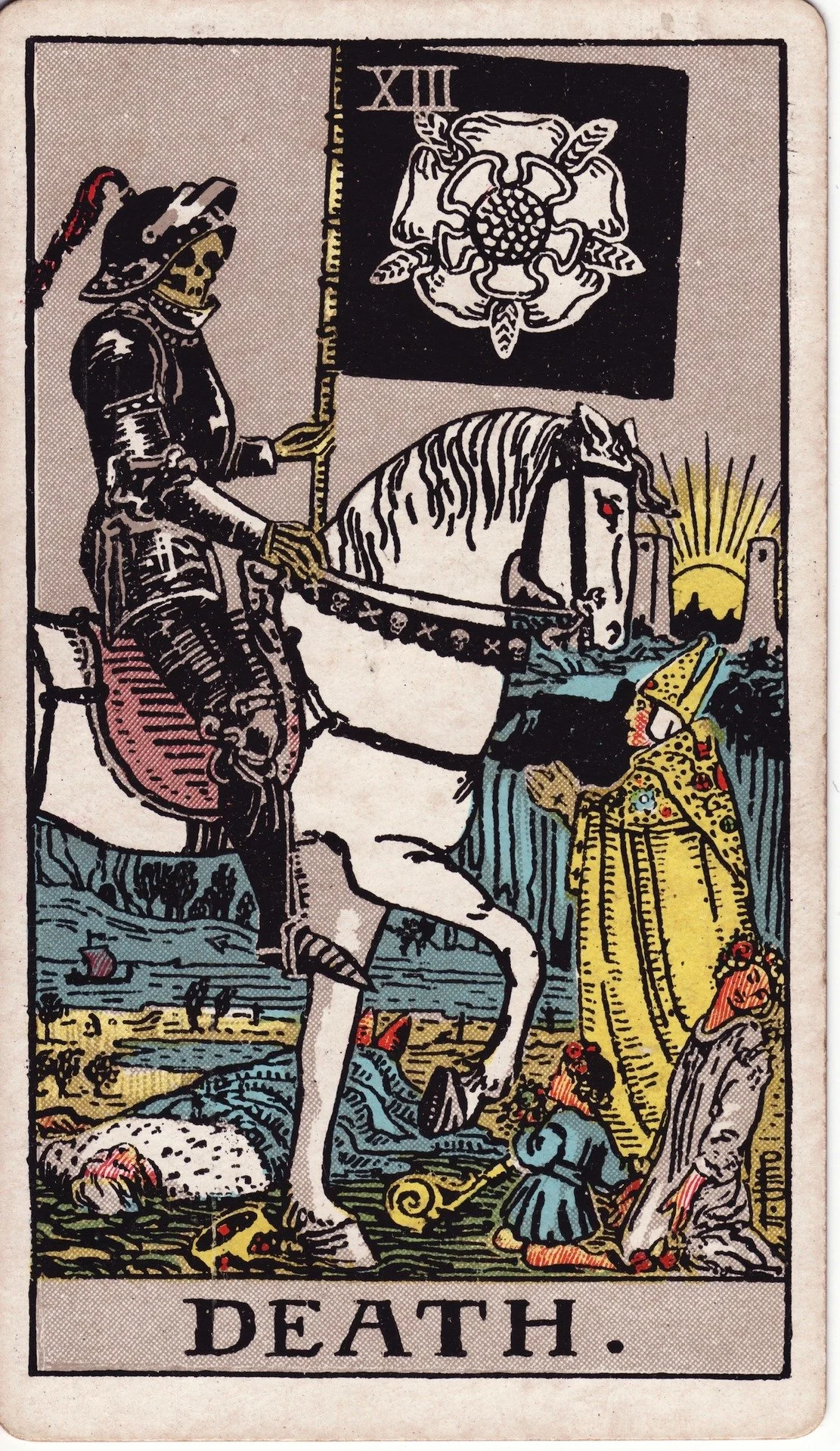
The eighth house covers transformation, death and rebirth, shared finances, and what lies beneath the surface. It's the domain of deep change — what's ending, what's being released, and what's emerging in its place. Death in the eighth house is one of the most on-the-nose placements in tarot: it speaks directly to necessary transformation and the clearing away of what's no longer serving you.
House 9 — Philosophy and Long Journeys
The ninth house governs belief systems, higher education, long-distance travel, and the search for meaning. The card here reflects where your worldview is being expanded or tested, and what larger questions are calling for your attention.
House 10 — Career and Public Life
The tenth house covers career, reputation, public standing, and long-term ambitions. It reflects how your professional life is unfolding and what the world is seeing when it looks at you.
House 11 — Community and Aspirations
The eleventh house governs friendships, groups, networks, and the hopes and dreams you hold for your future. The card here reflects the role community is playing in your life right now and what collective energies are shaping your path.
House 12 — The Subconscious and Hidden Matters
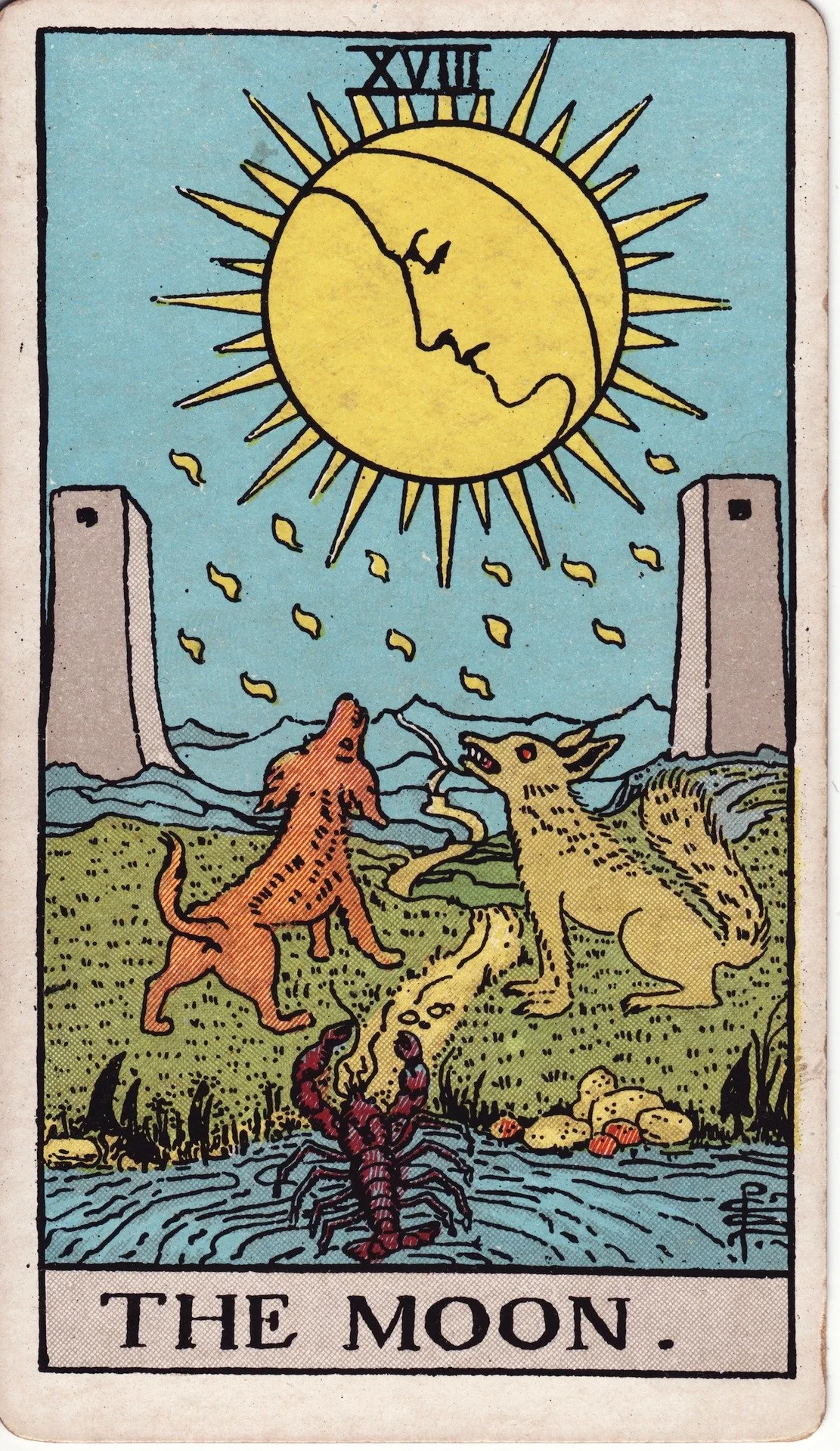
The twelfth house is the most private domain of the zodiac wheel — it governs the subconscious mind, hidden enemies, self-undoing, and what operates behind the scenes. The Moon in the twelfth house is a striking draw: it points to deep unconscious material, unexamined fears, or hidden dynamics that are influencing the querent's life without their full awareness.

How to Do an Astrological Reading
Shuffle thoroughly and draw thirteen cards if you're including the central theme card, or twelve if you're working with the houses alone. Place the cards face down in a circle, starting at the nine o'clock position and moving counterclockwise to mirror the conventional order of the astrological houses. Place the central theme card, if using one, in the middle of the circle.
Turn the cards over house by house, starting with the first and moving through to the twelfth. Interpret each card in relation to the domain its house governs, then read the central theme card last as the lens through which the whole reading is understood.
Reading the Spread as a Whole
With twelve cards in play, the astrological spread produces a large amount of information. The most useful approach is to identify where the reading is concentrated rather than trying to hold all twelve cards in equal focus.
Note which houses have drawn Major Arcana cards — those areas of life are carrying the most significant energy right now, the kinds of themes that go beyond day-to-day fluctuation. Houses with Minor Arcana cards reflect more ordinary, situational activity.
Look for suit clusters. If four or five of your cards are Swords, the reading is pointing to a period defined by mental activity, decision-making, or conflict across multiple areas of life simultaneously. A concentration of Pentacles suggests a phase focused on material concerns — building, consolidating, or stabilizing.
Notice which areas of life feel most active or most pressured based on the cards drawn, and let that focus your reflection. You don't need to extract equal insight from all twelve positions — let the reading show you where the real attention belongs.
When to Use the Astrological Spread
The astrological spread works best as an annual overview — drawn at the start of a new year, on a birthday, or at any significant transition point where a comprehensive view of all life areas is genuinely useful. It's also well suited to situations where you sense that multiple areas of life are shifting at once and you want to understand the full picture rather than focusing on one thread.
It's not the right layout for specific situational questions. If you want to understand a particular relationship, decision, or challenge in depth, a Celtic Cross tarot spread or horseshoe tarot spread will give you more focused and actionable insight. The astrological spread's strength is breadth — it's a map of your entire life at a given moment, not a deep dive into any one part of it.
Explore more spread layouts: Tarot Spreads by Layout
Deepen your card knowledge: Major Arcana · Cups · Swords · Wands · Pentacles